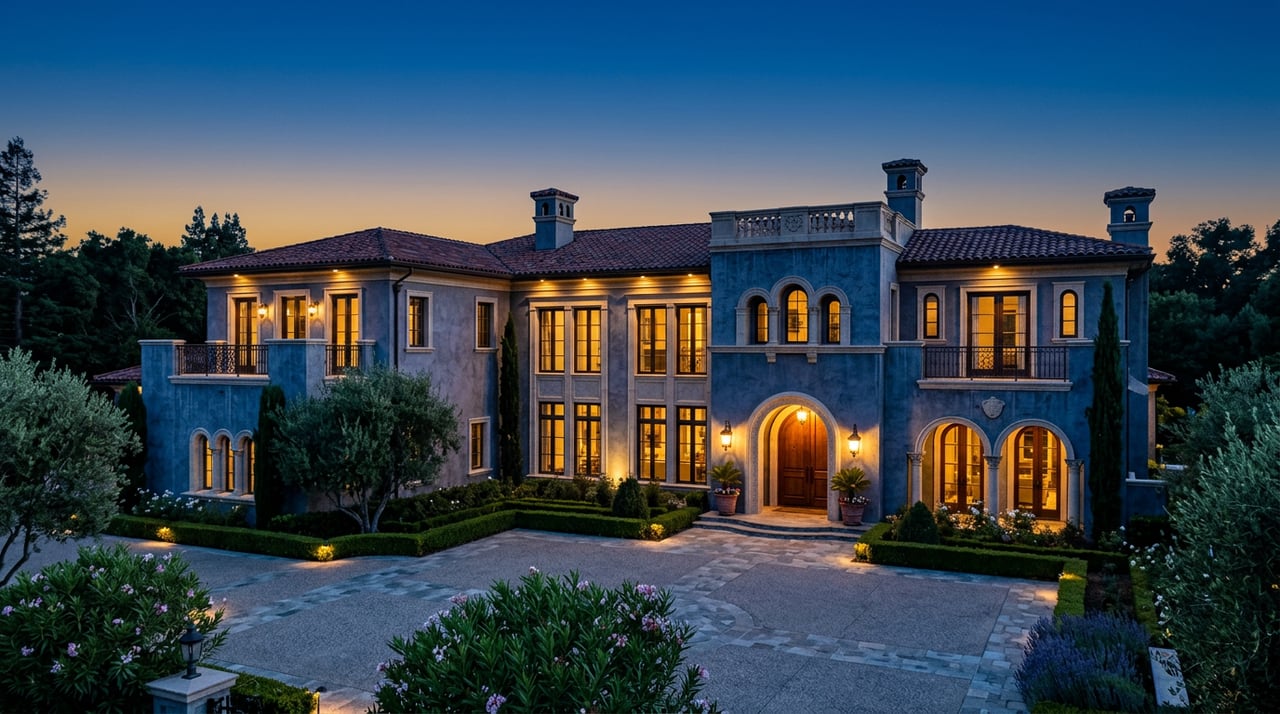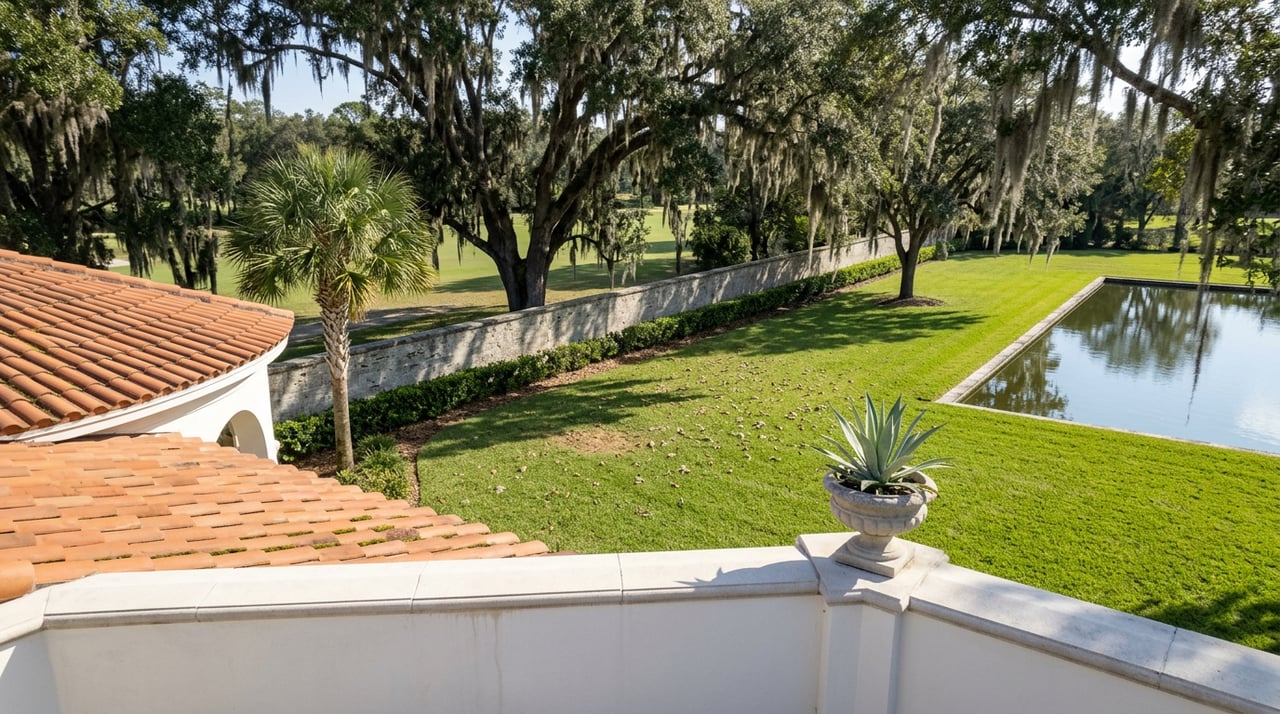
Two Bear's Club transactions unfolded within weeks of each other this year, and both make the same point without meaning to. In March, a trust linked to NextEra Energy CEO John Ketchum paid $19.61 million for a 10,971-square-foot estate at 136 Bears Club Drive, financed in part with a $13.73 million mortgage from JPMorgan Chase. A month later, spec developer Stuart Hankin's six-bedroom mansion at 228 Bear's Club Drive went pending at an asking price of $39 million, the most expensive home to find a buyer in all of Palm Beach County that week. Hankin had bought the acre it sits on for $3.4 million in 2021 and built from there.
Taken together, the Ketchum purchase and Hankin listing show how quickly high-end activity can unfold in this neighborhood. But owning the address and belonging to the club are two separate approvals, running on two separate timelines, with one of them largely outside a buyer's control.
The deed and the handshake aren't the same approval
Bear's Club operates as a private, non-equity club. Membership isn't attached to the title and it isn't for sale on the open market. It runs through the club's own membership office, by invitation, and the terms aren't published. Reporting on the club over the years has cited initiation figures anywhere from roughly $90,000, with a large share refundable, up to $350,000 depending on category and the era of the quote, alongside annual dues that have been reported anywhere from $12,000 to $25,000. That range alone tells you the terms aren't fixed the way a mortgage rate is. They're negotiated, privately, one applicant at a time.
More important for anyone timing a purchase: the club has been described as sitting at a full member complement with a waitlist behind it, even in years when homes inside the gates are actively changing hands. A closing date on a Bear's Club estate doesn't guarantee a tee time the following week. It guarantees you own a house next to a golf course you may not yet be allowed to play, sold by a broker rather than a membership director, cleared through a buyer approval process that some listings note runs through the HOA and, in certain cases, the club itself.
For a buyer relocating on a school-year deadline or a corporate transfer timeline, that gap matters more than the purchase price, so membership timing should be weighed separately from the condition of the home.
Nobody agrees on how many homes are actually there
Ask five sources how many homes exist inside Bear's Club and you'll get five different answers, and the differences aren't rounding errors. They come down to what's being counted.
| Counting method | Homes counted |
|---|---|
| Florida Department of Revenue 2025 tax roll, single-family parcels | 36 |
| MLS-tracked single-family homes built 2001 to 2016 | 68 |
| Local brokerage total, homes built 2001 to 2013 | 96 |
| Developer's original site plan (estates, vintage estates, golf villas, club cottages combined) | 99 |
Each number is defensible on its own terms. The tax roll counts parcels. The MLS figure counts what's changed hands through a broker in a given window. The 96 and 99 counts include villa and cottage product that some buyers wouldn't consider comparable to a full estate lot at all.
What this means in practice is that there's no clean, agreed-upon inventory base to build a comp set from. A national portal that reports a low-90s or high-30s home count isn't wrong, it's just answering a different question than the one a buyer actually needs answered: how many homes like mine have traded recently, and for how much. Inside Bear's Club, that number in any given twelve-month window can be a handful, sometimes fewer.
A market this size doesn't price off a curve. It prices off the last comparable deal, whichever one that happens to be, and the terms attached to it.
The county is closing deals every week. Bear's Club barely shows up.
Zoom out to Palm Beach County's broader $3 million-and-up market and the contrast gets sharper. Douglas Elliman's Eklund-Gomes team tracks every contract signed countywide in that tier, and the weekly rhythm through this August has been brisk. Buyers signed 16 contracts totaling $245.4 million in asking volume between August 3 and August 9, 2026, averaging 48 days on market. The following week, August 10 through 16, saw 13 contracts close under $96 million, a slower stretch but still a dozen-plus deals in seven days.
Bear's Club, by comparison, doesn't appear most weeks. It shows up when something happens, the way the Hankin spec estate did in early April, and then it goes quiet again. That's not a sign of a cooling market. It's a sign of a market too small to generate weekly turnover in the first place. The county's luxury tier is liquid. Bear's Club is closer to a private secondary market where transactions are events, not a trend line.
That distinction should change how a buyer reads any pricing signal coming out of the neighborhood. A single headline sale, like the $19.61 million Ketchum trade, isn't a data point on a curve. In a market this thin, it's very close to the whole curve.
What this means if you're comparing clubs
None of this makes Bear's Club a bad option for a buyer who wants the Nicklaus name, the 401-acre setting, and the roster of resident golfers that has made the community a fixture on tour players' short lists. The course has hosted meaningful competitive golf this year alone, including U.S. Senior Open final qualifying in June and the Palm Beach County Nicklaus Junior Championship a few weeks later, and that kind of programming doesn't happen at a community coasting on reputation.
But it does mean the due diligence looks different than it would at a club where membership is bundled with the deed or handled on a faster track. If you're weighing Bear's Club against other Jupiter-area private clubs, the questions worth asking your broker before you write an offer aren't just about square footage and lot lines. They're about whether the seller's membership can transfer, whether the club requires a separate application regardless of who currently belongs, and how long that approval has taken for comparable buyers recently. Those answers vary by club, and they're rarely written down anywhere you can search.
Frequently asked questions
Is club membership required to buy a home in Bear's Club? Ownership and membership are handled separately. A buyer can close on a home without an approved club membership in hand, since the membership office runs its own application process independent of the real estate closing.
How many homes are actually in Bear's Club? Depends on who's counting. Public tax roll data and MLS-tracked figures each capture a different slice, ranging from the mid-30s to closer to 100 when villas and cottages are included alongside full estate lots.
Does an asking price like the $39 million Hankin listing reflect the broader market? Not directly. With so few transactions in any given year, an asking price like this is better understood as its own data point than as confirmation of a trend, which is different from how pricing works in the county's more liquid $3 million-plus segment.
Working with someone who tracks both timelines
Buying into a community like Bear's Club means underwriting two separate processes at once, the closing and the club approval, and getting the sequencing wrong can cost months. The Hyland Group has spent years working Jupiter's private club market from the inside, coordinating with membership offices, sellers, and HOA boards so a closing date and a club decision land on the same calendar instead of two different ones. If you're comparing Bear's Club to other gated communities along this stretch of the Palm Beaches, reach out to request a confidential home valuation and a straight answer about what a given property actually requires before you can call it yours.
This article is general information, not legal, tax or financial advice. Consult a qualified professional about your situation.