If your idea of home includes stepping from your backyard to your boat, Admirals Cove stands out for a reason. This is a community built around water access, not one where boating was added later, and that distinction shapes how you live there day to day. If you are weighing a move, a second home, or a waterfront upgrade, understanding how docks, canals, slips, and home types actually work can help you buy with confidence. Let’s dive in.
Admirals Cove Starts With the Water
Admirals Cove in Jupiter was designed with boating at its core. Official community history notes that development began in 1986, the marina and east golf course opened in 1988, and the canal system later connected to the Intracoastal Waterway.
That water-first planning still defines the lifestyle today. The community spans roughly 1,000 acres and includes 893 homes, with a canal network that plays a central role in how owners move through and enjoy the neighborhood.
Official sources vary on the exact mileage of navigable waterways. The safest takeaway is simple: Admirals Cove is deeply canal-based, and its direct connection to the Intracoastal is one of its biggest lifestyle advantages.
Boating Access Is a Daily Convenience
One of the strongest draws here is how practical boating can be. The marina offers direct access to the Intracoastal Waterway and is positioned just west of the Intracoastal, about two miles south of the Jupiter Inlet and eight miles north of the Port of Palm Beach.
For many buyers, that means less time navigating to open water and more time actually using the boat. Whether you enjoy quick day trips, fishing runs, or hosting aboard a larger yacht, that access matters.
The marina’s published features include:
- More than 500 private docks
- 63 marina slips
- A floating fuel dock
- Pump-out facilities
- A ship store
- Single-phase and three-phase electric service
- Available 480-volt power
Those are meaningful practical details, especially if you are comparing Admirals Cove with communities where boating access is more limited or less integrated into daily ownership.
Marina Slips and Yacht Fit Need Verification
If you own a larger vessel, this is one of the most important points to understand before you buy. Official Admirals Cove sources do not state a single, consistent maximum vessel size for marina accommodations.
One official page says the marina can accommodate vessels up to 165 feet, while another says the 63 slips accommodate yachts up to 130 feet. That does not mean the marina is unsuitable. It means you should confirm the specific slip, berth, and fit for your vessel before making assumptions.
This is especially important if you are buying with a yacht already in mind. In a community like Admirals Cove, the right home search is often tied to the right dock setup, neighborhood rules, and marina options from the start.
Home Types Shape the Boating Experience
Admirals Cove is not a one-size-fits-all waterfront community. The official materials point to three key residential categories that matter most for boating-oriented buyers:
- Custom residences
- Villas and Patio Homes
- Harbor Homes
That distinction is important because your boating options can vary significantly depending on the property type. Some homes are better suited to larger vessels and private dock use, while others may work better for smaller boats or buyers who want lower-maintenance living.
In general, wider custom or patio-home lots are more likely to accommodate larger boats. Harbor Homes and certain villa-style options tend to align more naturally with smaller boats and condo-style approval structures.
Private Dock Rules Matter More Than Buyers Expect
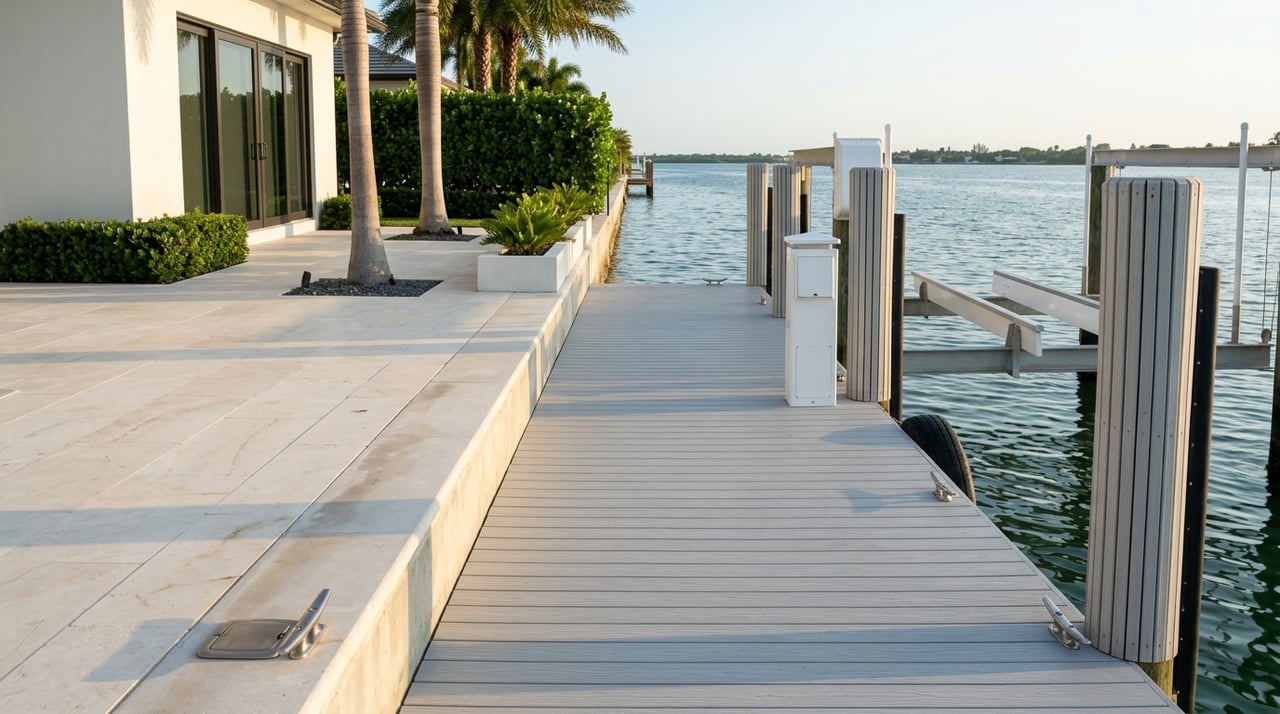
If you are focused on a home with a private dock, it is essential to look beyond the listing photos. Admirals Cove’s HOA materials make clear that dock use is governed by practical rules tied to lot width, setbacks, access, and water depth.
For Custom and Patio Homes, lots up to 70 feet wide use a formula based on shoreline width to determine allowable boat length. Lots wider than 70 feet require 15-foot setbacks on each side, and no part of the docking setup can encroach into setbacks or navigable channels.
The published guidance also notes that actual allowable boat length may be reduced by factors such as:
- Channel depth
- Channel width
- King tides
- Water depth around the dock
In other words, the dock may look generous, but the real-world fit for your boat still needs to be verified. This is one of the biggest reasons boating buyers benefit from careful due diligence before closing.
Some Neighborhoods Have Specific Boat Limits
Certain residential sections publish more specific boat-size guidance. According to the HOA materials:
- Villa II homes can allow 40 feet when accessible
- Captains Way Villas allow 40 feet overall
- Captains Way Harbor Homes allow 35 feet overall, with no fly bridge or tower
- Spyglass and Waterside Harbor Homes allow 34 feet, subject to condo-board approval
These differences can shape your search in a very practical way. If you want lock-and-leave convenience and still plan to keep a smaller boat, a Harbor Home or villa-style property may be a strong fit.
If your boating needs are more substantial, a larger custom-home lot may be the better path. The key is matching the home type to how you actually plan to use the water.
Ownership Includes Dock Responsibilities
Waterfront ownership here also comes with ongoing responsibilities. The HOA states that homeowners are responsible for dock maintenance, dock lighting, and dredging under or around private docks.
Lighting standards are also specific. Docks must remain structurally sound, include at least one light aimed at the outermost channel piling, and use white to cool-white lighting no higher than 3000 Kelvin.
The rules also prohibit vapor lights and lights over 100 watts. For buyers, that is a reminder that a private dock is not just an amenity. It is part of the property that requires maintenance and compliance over time.
Marina Membership May Be Worth a Closer Look
For some buyers, private dockage is the goal. For others, marina access may be the more practical priority. Admirals Cove offers a Marina Member class among its membership options, which may appeal if your main focus is dock and marina use rather than golf.
This can be especially useful for owners who want boating access without tying their lifestyle to a specific private-dock setup. As with slip size and vessel fit, the right membership path should be confirmed based on your intended use.
Seasonal Owners Should Plan for Waterfront Realities
If you expect to use the property seasonally, waterfront ownership adds a layer of planning that inland homes do not. The Atlantic hurricane season runs from June 1 through November 30, and Admirals Cove’s resident guidance asks owners to secure items such as patio furniture, kayaks, paddleboards, dock boxes, grills, and vessels well before storms threaten.
That matters if you spend part of the year away. A waterfront property can deliver an exceptional lifestyle, but it also benefits from a smart ownership plan during the months when you are not in residence.
The community’s MPOA also offers services that may be especially helpful for seasonal or absentee owners. These include weekly property checks, concierge-style assistance, and help with tasks such as tying down a vessel.
The Water Is Both an Amenity and an Ecosystem
One of the more distinctive parts of Admirals Cove living is that the canals are not just scenic. The resident guide notes that swimming is prohibited in canal waterways and also warns that wildlife such as manatees, alligators, sharks, otters, bobcats, and coyotes may be present.
For buyers comparing waterfront communities, that is an important point of context. Here, the water is a working part of the community and a natural environment, not only a backdrop for the view.
That can be part of the appeal. It also underscores why buyers should evaluate boating access, dock setup, and day-to-day use with a practical lens.
What Smart Buyers Confirm Before They Purchase
In Admirals Cove, the right waterfront purchase is often about details, not just the address. Before you move forward on a specific property, it makes sense to confirm a few key points.
Here is a practical checklist:
- Does the home include private dock rights?
- What boat length is actually permitted at that dock?
- Do setbacks, depth, or channel conditions reduce usable capacity?
- Does a condo or neighborhood board need to approve the berth?
- Is a marina slip a better fit for your vessel?
- Do you need a specific membership category for the boating access you want?
Those answers can shape whether a property is simply attractive or truly aligned with your lifestyle. In a community with this many waterfront variations, precision matters.
If you are exploring Admirals Cove, the best strategy is to approach the search with both lifestyle vision and technical clarity. For tailored guidance on waterfront homes, private dock properties, and boating-focused opportunities in the Palm Beaches, connect with The Hyland Group.
FAQs
What makes Admirals Cove different for boating in Jupiter?
- Admirals Cove was developed around water access, features a large canal network connected to the Intracoastal Waterway, and includes both private docks and marina facilities.
What should buyers know about boat size limits in Admirals Cove?
- Boat size limits can depend on the home type, lot width, setbacks, access, channel conditions, and water depth, so the allowable length should always be confirmed for the specific property.
What marina features are available in Admirals Cove?
- Official materials list more than 500 private docks, 63 marina slips, a floating fuel dock, pump-out facilities, a ship store, and several electric service options.
What home types are most relevant for boating buyers in Admirals Cove?
- The main boating-relevant categories are Custom residences, Villas and Patio Homes, and Harbor Homes, and each can offer a different dock setup and vessel fit.
What should seasonal owners consider in Admirals Cove?
- Seasonal owners should plan for hurricane season, secure outdoor and marine items in advance, and consider available property-check and concierge-style services that support absentee ownership.
Are there special rules for private docks in Admirals Cove?
- Yes. Homeowners are responsible for dock maintenance, lighting, and dredging, and the HOA also sets standards for dock lighting, setbacks, and structural compliance.