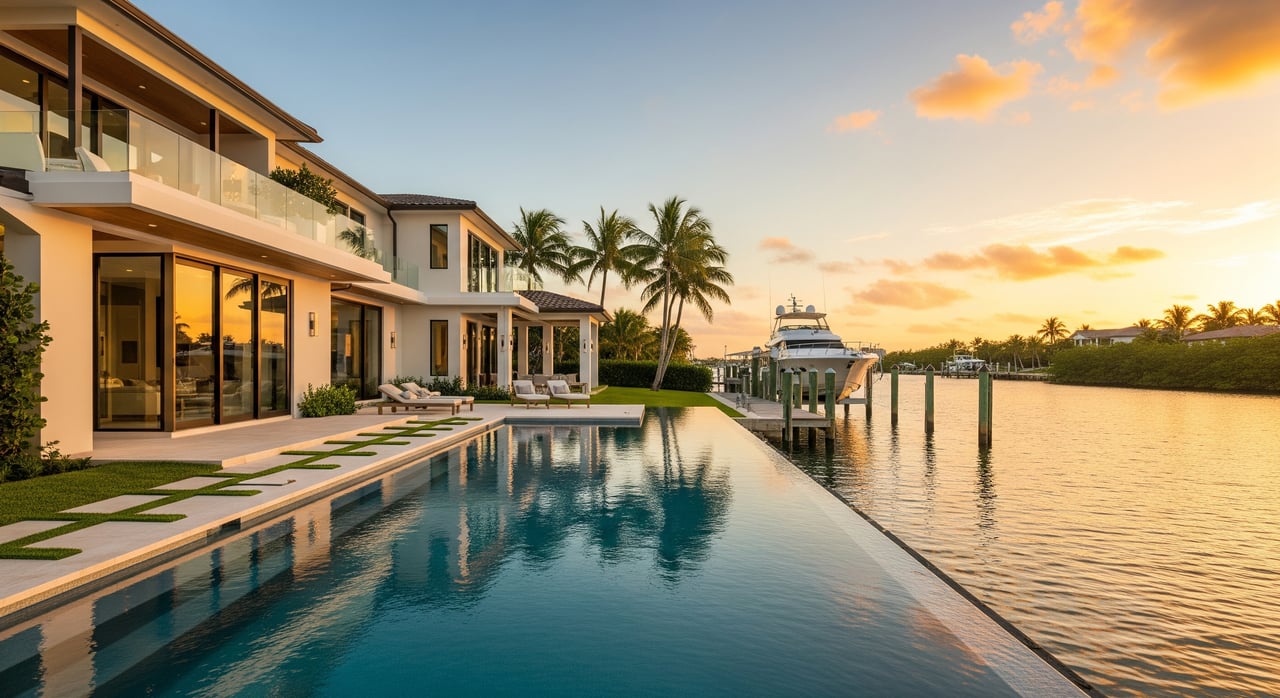
Dreaming about stepping from your backyard onto your boat and cruising to the Jupiter Inlet? Buying waterfront in Jupiter and Tequesta can deliver that lifestyle, but the right property depends on your vessel, the waterway, and the rules that govern both. If you want smooth access and long-term peace of mind, you need more than curb appeal. You need clear answers on depth, bridge clearances, dock condition, permits, and insurance.
This guide walks you through the essentials for buying on the Intracoastal Waterway, the Loxahatchee River, or a canal in the Jupiter and Tequesta area. You will learn how to match a property to your boat, what to inspect, which approvals to expect, and how to plan your timeline. Let’s dive in.
Why Jupiter and Tequesta waterfronts
You enjoy a rare blend of blue-water access through the Jupiter Inlet, protected cruising along the Intracoastal Waterway, and scenic routes on the Loxahatchee River. Many homes sit on canals that connect to these main arteries, while others front the river or ICW directly. Your day-to-day experience depends on how those waterways affect navigation, speed zones, and access to open ocean.
If you want a simple route to the inlet and fewer size constraints, properties on the ICW or river often provide deeper water and more maneuvering room. Canal homes can deliver excellent convenience and value, but you need to confirm width, depth, and turning space for your specific boat.
Know your waterway type
Canals: fit and turning room
Canal width and the presence of adjacent docks limit the maximum beam and length you can safely maneuver. Tight turns or narrow basins can make it hard to bring a larger boat in or out. Shallow shoaling at low tide can restrict draft, and posted no-wake or slow-speed zones may affect travel time.
ICW and riverfront: depth and speed zones
Open-water lots on the ICW or Loxahatchee River typically offer more depth and easier navigation. You still need to verify local speed zones and seasonal slow-speed areas for manatee protection. Your real-world time to the inlet will vary with tides and traffic, especially during peak seasons.
Will your boat fit? Dockage essentials
Measure LOA, beam, draft, mast height
Start with your vessel specs: length overall, beam, draft, and mast or bridge clearance. These numbers translate into minimum slip length and width, required water depth at low tide, and the need for movable bridges. Larger or taller vessels may need to plan transit around drawbridge schedules.
Dock configurations and maneuvering
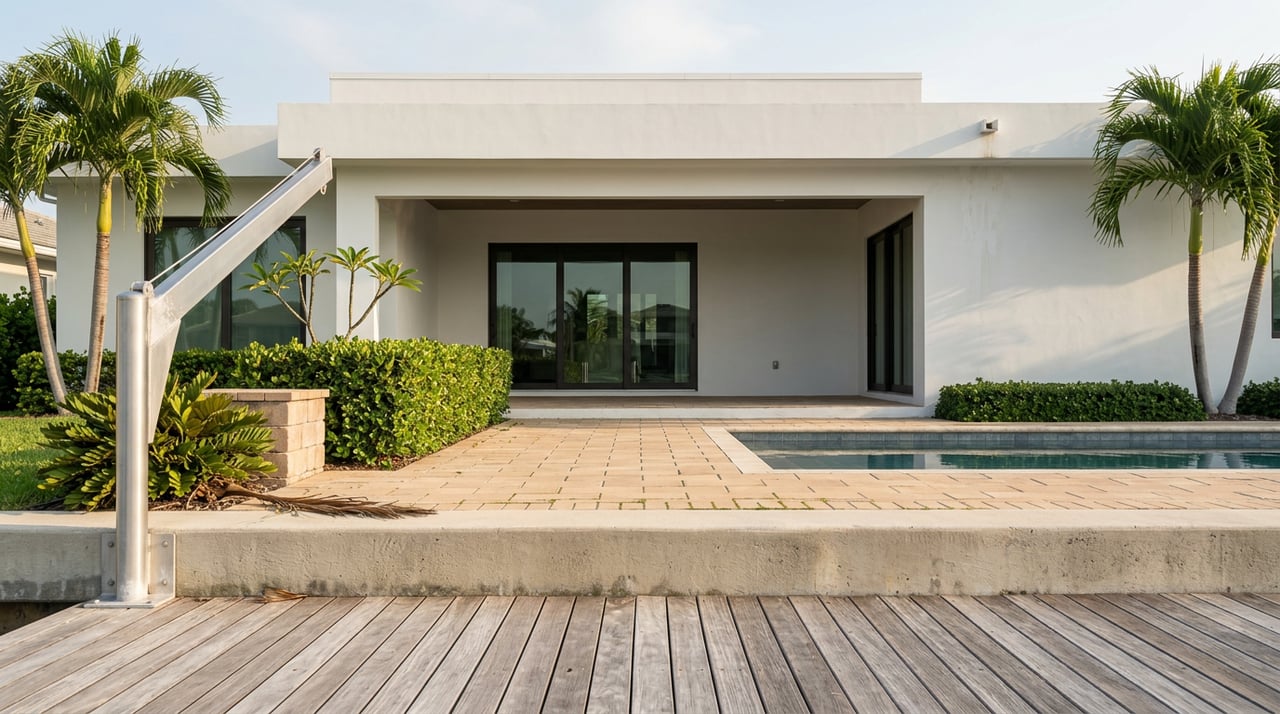
Waterfront homes here use side-tie finger piers, end-tie bulkheads, private docks with slips, and community or marina dockage. Confirm there is adequate turning room and safe approach given wind, current, and neighboring structures. If you plan to add a lift, match lifting capacity to vessel weight and have pilings and electrical service evaluated.
Seawalls, bulkheads, shoreline
Inspect the seawall or bulkhead for settlement, spalling, leaning, or voids. Determine who maintains it and how costs are shared if the community has common shoreline features. Replacements or major repairs often need local, state, and sometimes federal permits, which can affect scope, cost, and timing.
Depth, tides, and bridge clearances
Depth at mean low water
What matters is depth at mean low water, especially for draft-sensitive vessels. Tidal swings in southeast Florida are modest compared with many regions, but you should still check the local tide range and seasonal variations. If the canal is shallow, ask about dredging history and who pays for future maintenance.
Bridge types and schedules
Between you and open ocean there may be fixed bridges and drawbridges. Fixed spans set a hard limit on air draft, and drawbridge operating procedures impact timing for tall masts. Plan your route and confirm that your mast or hardtop height fits through all constraints on the way to the inlet.
Permits, rules, and environmental considerations
Layers of approval
Most dock, lift, and seawall work requires approvals across multiple agencies. Expect local building permits from the Town of Jupiter or Village of Tequesta, with possible Palm Beach County involvement. State and federal layers include the Florida Department of Environmental Protection and the U.S. Army Corps of Engineers when work affects navigable waters or sensitive resources.
HOAs and community docks
Review HOA covenants for boat-size limits, slip counts, permitted lift types, and use restrictions. Some communities have private marinas or shared docks with waiting lists, separate fees, and architectural review procedures. Get rules and any membership agreements early so you know what is allowed.
Protected resources and construction limits
Projects that shade seagrass, affect mangroves, or intersect manatee habitat can trigger design changes or mitigation. Construction typically requires turbidity and water-quality controls. These factors do not stop projects in most cases, but they can change timelines and costs.
Insurance, flood, and resilience
Flood insurance essentials
If the home sits in a mapped flood zone, lenders usually require flood insurance. National Flood Insurance Program policies normally have a 30-day waiting period for new coverage, so plan ahead. Lenders and insurers often ask for an elevation certificate to price risk and confirm compliance.
Hurricane readiness for docks
Ask how the dock and lift handle storm conditions. Piling embedment, bracing, and breakaway design matter for resilience. Budget for repairs or upgrades that improve performance in wind and surge, especially for larger vessels on lifts.
Your due diligence roadmap
Before you write an offer
- Define your boat’s LOA, beam, draft, and mast height.
- Request seller documents: recent survey showing water lines and dock location, permits for docks and seawalls, as-built drawings, lift specs, and maintenance records.
- Get HOA rules, marina agreements, and any dredging or shared-maintenance obligations.
Inspections and specialists
- Home inspection to cover the residence and basic systems.
- Seawall and bulkhead inspection by a coastal or structural engineer.
- Dock and lift inspection by a licensed marine contractor.
- Land survey with tidal lines and any encroachments, plus an elevation certificate if needed.
- Title review to confirm riparian or littoral rights, easements, and any shared access.
- Permit and environmental records search to verify status and constraints.
Sample timeline
- Days 1–14: Home inspection, request seller permits and as-builts; schedule marine and seawall evaluations.
- Days 7–21: Order survey and elevation certificate; complete dock and lift inspections; begin title and HOA review.
- Days 14–45: Receive reports; finalize title review; continue permit records requests; confirm community rules.
- Days 30–90+: If planning post-closing work, obtain bids and submit permit applications. Larger projects with state and federal reviews can take months to a year.
Out-of-market buyers: practical tips
Engage a local team early, including a coastal engineer, marine contractor, and title professional with waterfront experience. Visit the property at low tide if your draft is tight, and ideally during different conditions. Ask for documented repair history, hurricane claims, and any open permit issues, then verify through official records.
Work with a local waterfront advisor
Waterfront success in Jupiter and Tequesta starts with clarity on navigation, structure, and rules, then moves quickly when the right home appears. If you want a streamlined search, targeted property previews, and coordinated inspections, partner with a team that does this every day. For confidential guidance and a curated shortlist matched to your vessel and lifestyle, connect with The Hyland Group - CANCELLED 2/23.
FAQs
What should I check first when buying a Jupiter canal home?
- Confirm canal width, turning room, and depth at mean low water against your boat’s LOA, beam, and draft.
How do I know if a dock fits my boat in Tequesta?
- Measure usable slip length and width, verify piling positions, confirm lift capacity, and check approach angles for safe maneuvering.
What permits are needed to add a boat lift?
- Expect local building permits and possible state or federal approvals depending on location and environmental factors, plus any HOA architectural review.
Are there bridge limits between my home and the ocean?
- Map all fixed and movable bridges along your route to the Jupiter Inlet and compare their clearances to your vessel’s air draft.
How long do dock or seawall projects usually take?
- Minor repairs can clear permits and construction in weeks, while new docks or seawall replacements that trigger state and federal reviews can take months to a year.
Who maintains the seawall on a waterfront lot?
- In many cases the homeowner is responsible, but some communities share obligations, so confirm through title documents and HOA rules.
When should I line up flood insurance for a waterfront closing?
- Start early since NFIP policies normally have a 30-day waiting period and many lenders require an elevation certificate for pricing.